



广告
加载中

安踏爆改Musinsa:中国首店落地上海 未来还要开出100家

廖紫琳 2025-12-18 11:15
廖紫琳 2025/12/18 11:15

邦小白快读

EN
全文速览

Musinsa中国首店开业及安踏合作事件的核心信息。

1. Musinsa Standard在上海淮海中路开设1421平方米双门店,是其在中国的首店;Musinsa Store在上海安福路即将开业,南京东路二店在筹备中,计划到2030年在中国开出100家门店。

2. 安踏体育以500亿韩元收购Musinsa约1.7%股份,双方合资成立“Musinsa中国”公司(安踏持股40%,Musinsa持股60%),主导中国市场业务扩张。

3. Musinsa在天猫开设官方旗舰店,积累超10万粉丝,销量最高单品售出千单左右,单价多在千元以内;物流效率提升,由安踏泉州总仓发货,实现“下单48小时内发货”。

4. Musinsa成立于2001年,月活跃用户300万,2024年全球GMV达1.24万亿韩元(约60亿人民币),目标2030年全球GMV达到3万亿韩元;核心客群为20至39岁年轻人。

合作背景与挑战:安踏借Musinsa填补潮流赛道短板,因主品牌增速放缓;成功需Musinsa本土化改造与安踏运营自由度平衡,此模式或成国际品牌入华新范式。

Musinsa的品牌策略和消费趋势干货。

1. 品牌营销:Musinsa定位潮流品牌,覆盖全球2000多个品牌,被称为“韩版优衣库”或“韩版唯品会”;核心客群为20至39岁年轻人,30岁内占比极高,契合安踏抢占Z世代战略。

2. 品牌渠道建设:线上线下全面铺开,中国首店落地上海,天猫旗舰店积累超10万粉丝;计划到2030年中国门店扩张至100家,利用安踏零售网络和供应链提升效率。

3. 消费趋势与用户行为:年轻群体潮流消费需求强劲,成为安踏增长突破口;Musinsa韩国门店营收36%来自外国游客,中国游客是主力,显示跨境消费偏好。

产品研发启示:单品单价多在千元以内,销量高的售出千单左右,反映中高端定价策略;未来焦点是本土化调性保持,以应对入华挑战。

Musinsa入华的市场机会与风险提示。

1. 增长市场和机会提示:Musinsa计划在中国开100家门店,全球GMV目标3万亿韩元;消费需求变化中,年轻潮流消费成突破口,带来新销售机遇。

2. 合作方式和可学习点:安踏合资模式(持股40%)提供本土供应链和渠道优势,如物流效率提升;此合作可借鉴为国际品牌入华新商业模式。

3. 风险提示和事件应对:过往韩潮品牌(如Stylenanda)因本土化不足在中国失败,Musinsa需协同安踏完成本土化改造;潜在风险包括调性丧失或运营自由度不足,需平衡支持与自主。

正面影响:安踏超万家门店网络和FILA运营经验降低试错成本;负面影响若处理不当,可能重蹈覆辙。

供应链启示和商业机会干货。

1. 产品生产和设计需求:安踏供应链支持Musinsa物流,发货从福建泉州总仓,实现“下单48小时内发货”,效率较纯外资品牌提升;未来门店扩张可能增加生产订单需求。

2. 商业机会:Musinsa入华带来制造合作机会,安踏成熟供应链体系可被利用;数字化电商启示,天猫开店快速积累粉丝,显示电商平台对生产响应速度的要求。

3. 推进数字化启示:Musinsa从电商平台起家,覆盖11个国家,其模式启示工厂需强化线上渠道,以匹配潮流品牌需求。

生产优化:物流效率案例可作为参考,降低国际扩张成本。

行业趋势和解决方案干货。

1. 行业发展趋势:国际潮流品牌入华成趋势,Musinsa案例显示合作模式兴起;新技术如物流优化,由安踏供应链实现高效发货。

2. 客户痛点:韩潮品牌常因本土化不足和资源支撑薄弱失败,如Stylenanda案例;痛点包括跨境运营效率低和调性保持难。

3. 解决方案:安踏提供零售网络、供应链和品牌运营经验,解决本土化问题;合资公司结构降低风险,可作为服务商推荐模式。

服务启示:针对客户痛点,可设计类似合作方案,提升物流和渠道支持。

平台运营和风险规避干货。

1. 平台最新做法和招商:Musinsa平台覆盖2000多个品牌,天猫旗舰店积累粉丝并快速发货;计划中国门店扩张至100家,招商机会丰富。

2. 商业对平台需求和问题:平台需本土化改造以适应当地市场,安踏提供运营支撑;问题包括保持潮流调性同时给予品牌自由度。

3. 风险规避和运营管理:过往品牌失败案例提示需规避本土化不足风险;管理上,安踏需确保Musinsa运营自主,以维持吸引力。

平台风向:此合作模式或成国际品牌入华范式,需关注协同深度。

产业动向和商业模式启示干货。

1. 产业新动向:安踏与Musinsa合资模式(安踏持股40%)成为新合作范式;国际潮流品牌入华趋势加速,Musinsa案例显示互补优势。

2. 新问题和政策启示:协同深度挑战,如Musinsa需本土化调性保持与安踏运营自由度平衡;问题包括如何避免过往失败案例,政策上可启示支持跨境合作法规。

3. 商业模式:互补模式降低试错成本,安踏利用Musinsa填补年轻消费增长短板;此模式可能推广,影响产业格局。

研究启示:案例提供数据如GMV1.24万亿韩元和用户300万,可用于分析潮流消费动态。

返回默认
声明:快读内容全程由AI生成,请注意甄别信息。如您发现问题,请发送邮件至 run@ebrun.com 。

我是 品牌商 卖家 工厂 服务商 平台商 研究者 帮我再读一遍。

Quick Summary

Musinsa opens its first physical store in China and partners with Anta Sports.

1. Musinsa Standard debuts a 1,421 sqm dual-storefront on Huaihai Middle Road, Shanghai; a Musinsa Store on Anfu Road is set to open soon, with a second Nanjing East Road location in planning. The company aims to operate 100 stores in China by 2030.

2. Anta Sports invested KRW 50 billion for a 1.7% stake in Musinsa and established a joint venture, "Musinsa China" (Anta 40%, Musinsa 60%), to lead expansion in the Chinese market.

3. Musinsa’s Tmall flagship store has gained over 100,000 followers, with top-selling items moving around 1,000 units, mostly priced under RMB 1,000. Logistics have improved, with orders shipped from Anta’s Quanzhou warehouse within 48 hours.

4. Founded in 2001, Musinsa has 3 million monthly active users and reported KRW 1.24 trillion (approx. RMB 6 billion) in global GMV for 2024, targeting KRW 3 trillion by 2030. Its core demographic is consumers aged 20–39.

Context and challenges: Anta seeks to strengthen its presence in the youth fashion segment amid slowing growth for its main brand. Success hinges on balancing Musinsa’s localization with operational autonomy—a model that may set a precedent for foreign brands entering China.

Musinsa’s brand strategy and consumer trends.

1. Brand positioning: Musinsa operates as a global fashion platform, curating over 2,000 brands and often described as "Korea’s Uniqlo" or "Korean Vipshop." Its core audience of 20–39-year-olds, heavily skewed toward Gen Z, aligns with Anta’s youth-focused strategy.

2. Channel expansion: The brand is pursuing an omnichannel approach in China, starting with its Shanghai flagship and Tmall store (100,000+ followers), with plans to reach 100 stores by 2030, leveraging Anta’s retail network and supply chain for efficiency.

3. Consumer behavior: Strong demand among young consumers for trendy fashion presents a growth opportunity for Anta. In Korea, 36% of Musinsa’s store revenue comes from international tourists, with Chinese visitors as a key segment, indicating cross-border appeal.

Product insights: Most items are priced under RMB 1,000, with bestsellers reaching around 1,000 orders, reflecting a mid-to-high pricing strategy. Maintaining localized brand identity will be critical for success in China.

Market opportunities and risks with Musinsa’s entry into China.

1. Growth opportunities: Musinsa plans to open 100 stores in China and aims for KRW 3 trillion in global GMV. Shifting consumer preferences toward youth-driven fashion present new sales potential.

2. Partnership model: Anta’s 40% stake in the joint venture provides local supply chain and retail advantages, such as improved logistics efficiency. This model offers a blueprint for international brands entering China.

3. Risk factors: Past failures of Korean fashion brands like Stylenanda highlight the importance of localization. Musinsa must balance Anta’s support with operational independence to avoid losing its brand appeal.

Impact: Anta’s extensive store network and FILA’s operational experience lower trial costs. Mismanagement, however, could lead to repeated failures.

Supply chain insights and business opportunities.

1. Production and logistics: Anta’s supply chain supports Musinsa with 48-hour shipping from its Quanzhou warehouse, improving efficiency compared to purely foreign brands. Store expansion may increase future production orders.

2. Collaboration potential: Musinsa’s entry creates manufacturing opportunities, with Anta’s established supply chain as a key asset. Its rapid Tmall growth underscores the need for agile production to meet e-commerce demand.

3. Digital transformation: Originally an e-commerce platform operating in 11 countries, Musinsa’s model highlights the importance of online channels for factories serving trend-driven brands.

Optimization takeaway: The logistics case study offers a reference for reducing costs in international expansion.

Industry trends and solution insights.

1. Market trend: International fashion brands are increasingly entering China via partnerships, as seen in the Musinsa-Anta case. Logistics optimization through Anta’s supply chain is a key enabler.

2. Client pain points: Korean brands often struggle with localization and operational support, exemplified by Stylenanda’s exit. Challenges include low cross-border efficiency and maintaining brand identity.

3. Proposed solution: Anta provides retail networks, supply chain expertise, and brand management experience to address localization. The JV structure mitigates risk and can be recommended as a service model.

Service implication: Develop partnership-based solutions to enhance logistics and channel support for clients.

Platform strategies and risk management insights.

1. Platform updates: Musinsa’s platform hosts over 2,000 brands; its Tmall store has gained followers and ensures fast shipping. Plans for 100 stores in China present merchant recruitment opportunities.

2. Requirements and challenges: Platforms need localization support, which Anta provides. A key issue is balancing brand autonomy with local market adaptation.

3. Risk mitigation: Learn from past failures by avoiding insufficient localization. Management should ensure Musinsa retains operational freedom to sustain its appeal.

Industry direction: This partnership may become a template for international brands entering China, with the depth of collaboration as a critical factor.

Industry shifts and business model implications.

1. New developments: The Anta-Musinsa JV (Anta 40%) represents an emerging partnership model. The trend of global fashion brands entering China is accelerating, with complementary strengths evident in this case.

2. Challenges and policy implications: Key issues include balancing localization with operational independence and avoiding past failures. Policies supporting cross-border cooperation could be informed by this case.

3. Business model: The complementary partnership reduces trial costs, allowing Anta to tap into youth fashion growth. This model may be replicated, influencing industry dynamics.

Research value: Data points such as KRW 1.24 trillion GMV and 3 million MAUs provide material for analyzing fashion consumption trends.

Disclaimer: The "Quick Summary" content is entirely generated by AI. Please exercise discretion when interpreting the information. For issues or corrections, please email run@ebrun.com .

I am a Brand Seller Factory Service Provider Marketplace Seller Researcher Read it again.

【亿邦原创】日前,上海淮海中路的潮流版图迎来重磅玩家——韩国时尚零售巨头Musinsa旗下自有品牌Musinsa Standard中国首店正式开业,1421平方米的双层门店成为该品牌全球第五大门店。几乎同时,其多品牌集合店Musinsa Store也敲定上海安福路开业,南京东路二店已进入筹备阶段。

这场密集的入华动作背后,中国运动服饰巨头安踏的身影清晰可见。

2025年初,安踏体育以500亿韩元收购Musinsa约1.7%的股份;随后在8月,安踏体育与Musinsa双方共同投资成立合资公司“Musinsa中国”,其中安踏集团持股40%,Musinsa持股60%,Musinsa中国将主导Musinsa Standard和Musinsa Store等业务在中国市场的发展。

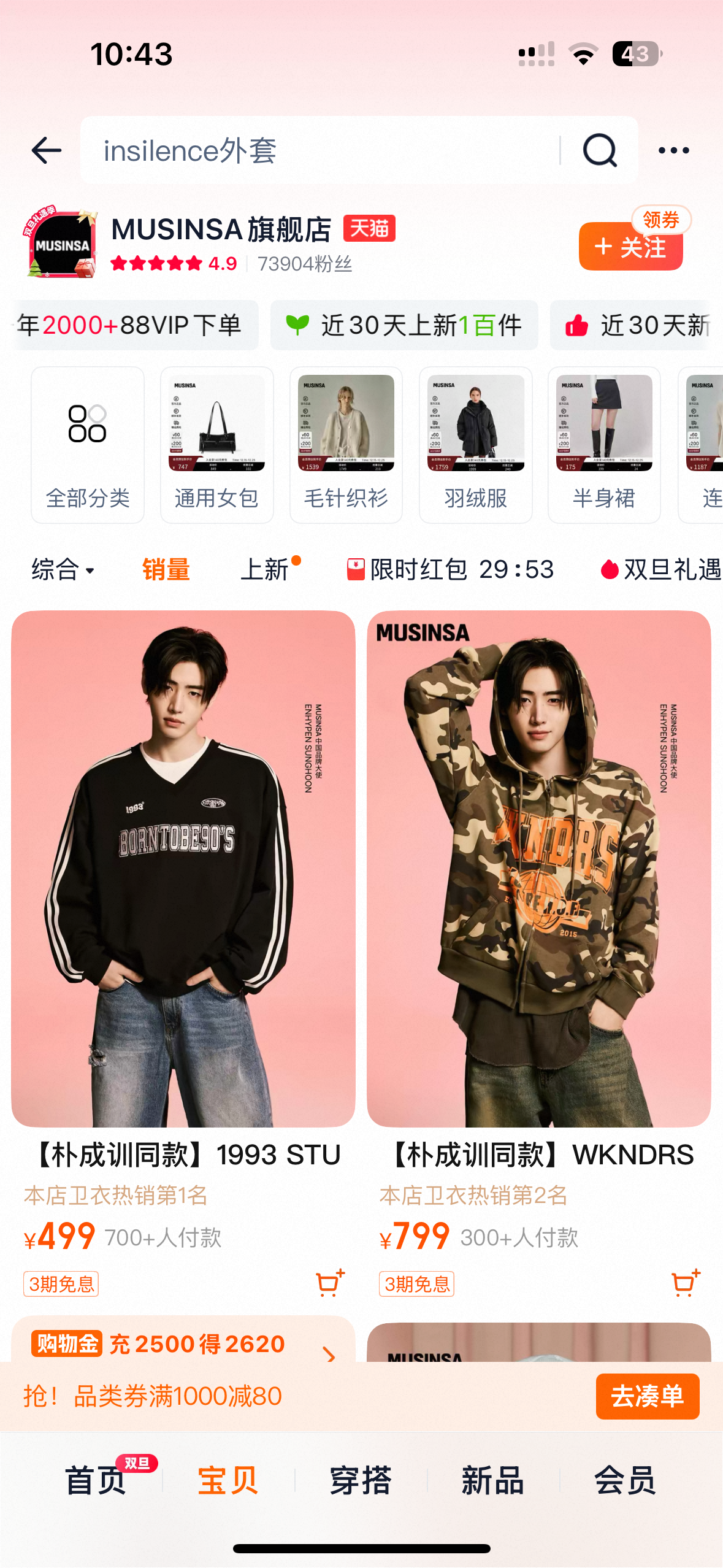
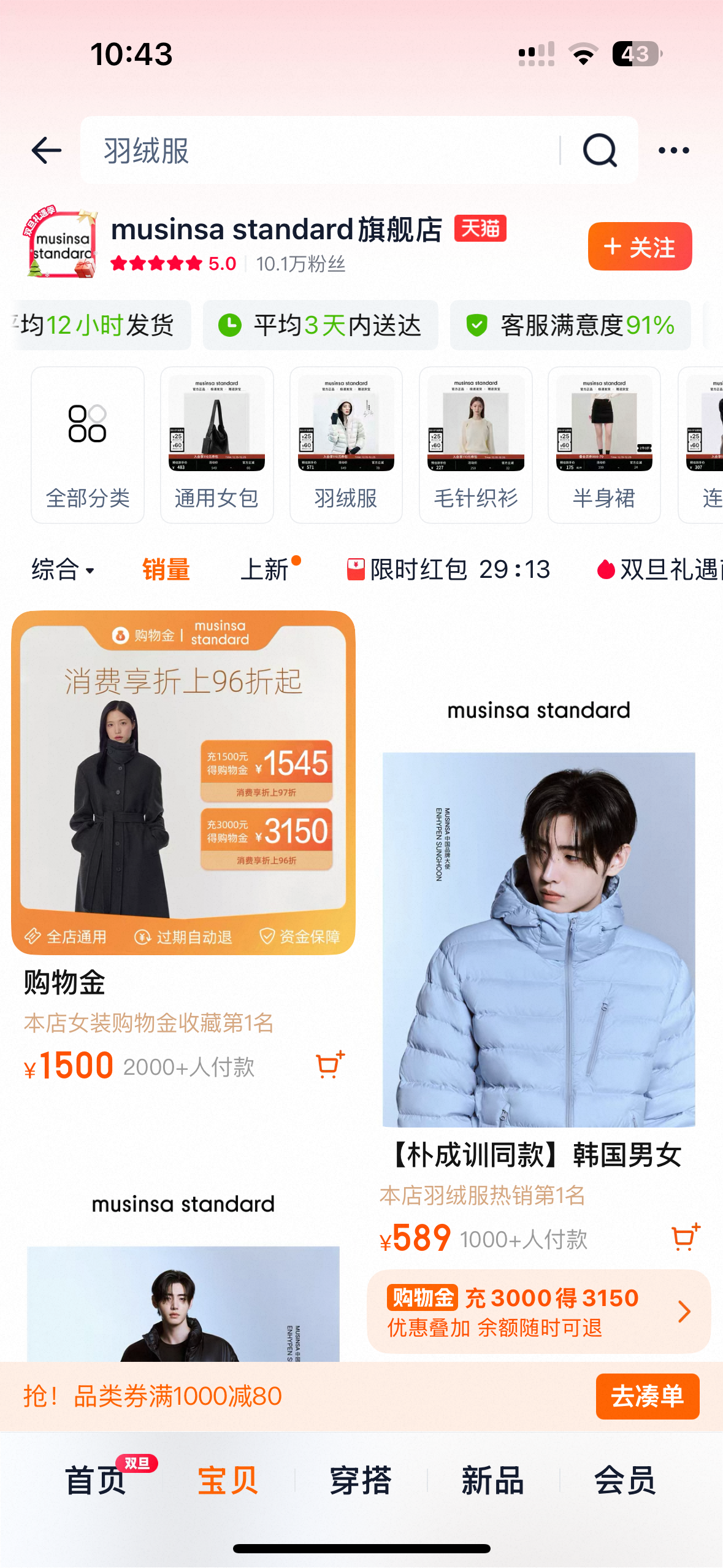
今年以来,在安踏的主导下,Musinsa先是9月在天猫密集开店,Musinsa Standard官方旗舰店与Musinsa旗舰店,后在线下渠道全面铺开,消息称Musinsa计划到2030年在中国市场扩张门店至100家,全球GMV目标达到3万亿韩元。

Musinsa入华的底气,来源于过往的业绩。成立于2001年的Musinsa,准确的说是一家服饰电商平台,从球鞋社区论坛起步,逐步转型为潮流内容平台,再拓展至电商领域。

截至2025年4月,Musinsa全球商店拥有2000多个品牌,月活跃用户数达到300万,业内有人将其称之为“韩版优衣库”、“韩版唯品会”。而在线下业务方面,Musinsa方面曾透露,集团韩国门店营收中约36%来自外国游客,其中中国游客为主力消费群体。

2024年,Musinsa全球GMV达1.24万亿韩元(约合人民币60亿元),成为韩国首个年销售额突破1万亿韩元的在线时尚平台;截至2025年,其线上商店已覆盖11个国家,在中国香港、中国台湾地区已完成初步布局。

进入中国市场后,Musinsa Standard与Musinsa在天猫已经分别积累了超10万店铺粉丝和7万店铺粉丝,销量最高的单品约售出千单左右,单品单价多在千元以内。有细心的网友已经发现,Musinsa Store天猫旗舰店已实现"下单48小时内发货",而发货地正是安踏位于福建泉州的总仓,物流效率较纯外资品牌提升显著。

在服饰行业里,一直存在着韩潮品牌入华“魔咒”,此前Stylenanda、NERDY等韩国品牌均因本土化不足、资源支撑薄弱等综合因素在中国市场折戟。

这也是促成Musinsa与安踏合作的重要原因,Musinsa看中的是其超过一万家线下门店的零售网络、成熟的供应链体系和FILA、始祖鸟等外资品牌的运营经验,即借助本土供应链与渠道优势,降低国际扩张的试错成本。

对安踏而言,此次合作也是填补潮流赛道短板的关键布局。近年来,安踏主品牌与FILA增速逐步放缓,2025年上半年及三季度安踏品牌仅录得单位数增长,FILA增速疲软,而旗下其他品牌增速也从高位回落。在专业运动领域根基稳固后,年轻群体的潮流消费需求成为新的增长突破口。

而Musinsa平台覆盖海量潮流品牌,核心客群集中在20至39岁,其中30岁以内消费者占比极高,恰好契合安踏抢占Z世代和年轻一代心智的战略目标。

这场试验的成败,将取决于双方的协同深度——Musinsa能否保持潮流调性的同时完成本土化改造,安踏能否在提供支撑的同时给予品牌足够的运营自由度。从行业视角看,这种"互补"的合作模式,或许将成为未来国际潮流品牌入华的普遍范式。

亿邦持续追踪报道该情报,如想了解更多与本文相关信息,请扫码关注作者微信。

文章来源:亿邦动力

广告
微信
朋友圈

这么好看,分享一下?

朋友圈 分享

APP内打开

+1
+1
微信好友 朋友圈 新浪微博 QQ空间
关闭
收藏成功
发送
/140 0