广告
加载中

安克创新向港交所递交招股书 今年欧洲收入贡献已提升至26.9%

亿邦动力 2025-12-03 15:34
亿邦动力 2025/12/03 15:34

邦小白快读

EN
全文速览

文章重点介绍了安克创新向港交所递交招股书的相关核心信息与业务表现。

1.安克创新计划主板挂牌上市推进“A+H”战略,其营收从2022年143亿元增长至2024年247亿元,年复合增长率达31.7%,毛利同步大增。

2.公司产品线覆盖智能充电储能(占营收51%)、智能家居及创新(26%)和智能影音(23%)三大类,年复合增长率分别为35.7%、28.7%和29.6%。

3.在全球市场表现突出:移动充电产品全球第二,储能领域全球第一大阳台光伏储能品牌,安防产品全球前五,无线耳机排名第六。

4.收入分布以海外为主(96.4%),其中北美占比48%但略降,欧洲地区收入贡献从不足20%上升至2025年前三季度的26.9%。

5.销售渠道以线上为主导(71.2%),独立站收入从2022年7亿元增至2024年25亿元;线下增长36.7%,在纽约时代广场开设自营门店。

6.风险点在于依赖电商平台(如亚马逊占收入50%以上),电商收入占比超过60%但略有下降趋势。

7.公司“浅海战略”专注800亿美元以下细分市场,行业数据显示中小型智能硬件市场复合增长率11.5%,潜力巨大。

安克创新的品牌策略和市场定位提供实操启示。

1.品牌营销:公司运营多个子品牌如Anker(充电设备)、eufy(智能家居)和Soundcore(音频),覆盖不同品类,移动充电产品全球份额达5.0%,体现品牌溢价和消费者认可度。

2.品牌渠道建设:线上渠道占71.2%,亚马逊销量领先;线下合作全球零售巨头开设门店(如纽约时代广场店),入口产品通过卖场推广,增强渠道覆盖。

3.产品研发:研发开支从7.6%增至8.5%,推动智能硬件创新,如“浅海战略”聚焦用户需求多元化的细分领域,新品开发快速响应消费趋势。

4.消费趋势:从收入分布看,欧洲区域增长快速(占比升至26.9%),反映用户行为向该地区转移;产品线收入结构显示智能充电储能需求强劲,显示便携性与可持续性趋势。

文章揭示行业机会、风险与可学习模式。

1.增长市场:欧洲市场收入贡献从2022年不足20%增至26.9%,中小型智能硬件市场复合增长率11.5%(预计2029年达5836亿美元),提供新兴市场拓展机会。

2.消费需求变化:独立站收入增长超三倍(从2022年7亿元到2024年25亿元),反映用户直购偏好提升;智能家居产品份额增加,显示家庭智能安防需求上升。

3.风险提示:电商平台依赖风险高(亚马逊占50%以上),2022-2024年占比超60%,可能面临渠道集中负面影响;建议事件应对措施如渠道多元化。

4.可学习点:安克采用多品牌战略并推进自营线下门店(如纽约店),合作方式包括与零售巨头合作店中店;最新商业模式如独立站建设和浅海战略,可借鉴以抓住创新空间。

文章提供产品生产启示和商业机遇。

1.产品生产和设计需求:公司产品覆盖智能充电储能、智能家居等,充电产品贡献51%营收,显示高需求;细分品类如阳台光伏储能排名第一,表明设计和研发应聚焦特定应用场景。

2.商业机会:中小型智能硬件市场复合增长率11.5%,预计2029年达5836亿美元,提供批量生产机会;欧洲市场增长(占比升至26.9%),可开拓该区域供应链。

3.推进数字化和电商启示:电商收入占比超60%,但风险提示依赖平台;独立站增长超三倍启示可建自有平台;公司研发开支增至8.5%,强调推进数字化生产以优化成本(销售成本占比下降至57%)。

文章聚焦行业趋势、痛点和方案。

1.行业发展趋势:中小型智能硬件市场复合增长率11.5%,远高于整体市场的5.9%;智能充电、储能等领域增长快,市场规模2024年3400亿美元。

2.新技术:公司研发开支增至8.5%,推动“浅海战略”,聚焦创新空间大的细分领域;产品如智能影音耳机排名第六,显示技术应用广泛。

3.客户痛点:电商平台依赖(占比超60%)导致风险;安克创新指出渠道集中问题,客户可能面临平台变动冲击。

4.解决方案:公司采用线上线下多渠道战略(线上主导,线下增长36.7%),独立站建设成功增长超三倍,显示多元化分销方案;区域扩张(如欧洲增长)可作为风险规避模型。

文章解读平台需求和风险规避。

1.商业对平台的需求和问题:安克依赖电商平台(收入占比超60%),其中亚马逊占50%以上;这突显商家对平台销售的高依赖性,平台需提供稳定服务支持品牌增长。

2.平台的最新做法:安克创新作为卖家代表,在亚马逊多区域销量领先;平台招商通过店中店合作推广产品(如入门款通过大卖场),增加平台黏性。

3.运营管理:公司独立站收入大增,显示平台可优化自营模式;线下门店建设拓展(如纽约店),平台可推动线上线下一体化运营。

4.风险规避:招股书强调依赖风险(2025年占比降至58.48%),提示平台需避免集中化问题;公司多元化渠道做法可引导平台政策改进以增强稳定性。

文章揭示产业新动向和政策商业模式启示。

1.产业新动向:安克创新推进“A+H”上市战略,区域市场从北美向欧洲转移(占比升至26.9%);中小型智能硬件市场复合增长率11.5%,整体市场仅5.9%。

2.新问题:依赖单一电商平台(亚马逊占比50%以上)被列为风险因素,引发集中化风险讨论;行业可能面临渠道模式固化挑战。

3.政策法规建议和启示:招股书提出浅海战略(专注800亿美元以下细分品类),建议政策支持创新空间;数据如中小型市场增长快,可引导产业政策优化。

4.商业模式:公司采用多品牌战略(子品牌分占份额),线上线下整合(独立站增长超三倍);浅海战略显示商业模式创新,聚焦高增长潜力领域。

返回默认

声明:快读内容全程由AI生成,请注意甄别信息。如您发现问题,请发送邮件至 run@ebrun.com 。

我是 品牌商 卖家 工厂 服务商 平台商 研究者 帮我再读一遍。

Quick Summary

Anker Innovations has submitted its IPO prospectus to the Hong Kong Stock Exchange, highlighting its core business performance and strategic direction.

1. The company plans a dual primary listing (A+H shares), with revenue growing from RMB 14.3 billion in 2022 to RMB 24.7 billion in 2024, achieving a 31.7% CAGR, alongside significant gross profit expansion.

2. Its product portfolio comprises three main categories: smart charging & energy storage (51% of revenue), smart home & innovation (26%), and smart audio & video (23%), with CAGRs of 35.7%, 28.7%, and 29.6%, respectively.

3. Anker holds strong global market positions: #2 in mobile charging, #1 in balcony solar energy storage, top 5 in home security products, and #6 in wireless earbuds.

4. Revenue is predominantly overseas (96.4%), with North America contributing 48% (slightly declining) and Europe growing to 26.9% in the first three quarters of 2025.

5. Online channels dominate sales (71.2%), with direct-to-consumer website revenue surging from RMB 700 million in 2022 to RMB 2.5 billion in 2024; offline sales grew 36.7%, including a flagship store in Times Square, New York.

6. Key risks include reliance on e-commerce platforms (Amazon accounts for over 50% of sales), though e-commerce’s overall revenue share has slightly declined.

7. The "Shallow Sea Strategy" targets niche markets below $80 billion, with the small-to-medium smart hardware segment showing an 11.5% CAGR and significant growth potential.

Anker Innovations' brand strategy and market positioning offer practical insights for brands.

1. Brand Marketing: It operates multiple sub-brands (Anker for charging, eufy for smart home, Soundcore for audio) across categories, with a 5.0% global share in mobile charging, reflecting strong brand equity.

2. Channel Building: Online channels contribute 71.2% of sales, led by Amazon; offline expansion includes partnerships with major retailers and flagship stores (e.g., Times Square), enhancing reach.

3. R&D Focus: R&D expenditure rose to 8.5%, driving innovation under the "Shallow Sea Strategy," which targets diverse user needs in niche segments.

4. Consumer Trends: European revenue growth (up to 26.9%) signals shifting demand; strong performance in smart charging & energy storage highlights trends toward portability and sustainability.

The article reveals growth opportunities, risks, and replicable strategies for sellers.

1. Growth Markets: Europe's revenue share grew to 26.9%, while the small-to-medium smart hardware market boasts an 11.5% CAGR (projected to reach $583.6 billion by 2029), offering expansion potential.

2. Demand Shifts: Direct-to-consumer sales surged over threefold (2022–2024), indicating rising DTC preference; smart home growth reflects increased demand for security solutions.

3. Risk Alert: High reliance on e-commerce platforms (Amazon >50%) poses channel concentration risks; diversification is advised.

4. Learnings: Anker’s multi-brand strategy, offline stores (e.g., New York flagship), and "Shallow Sea" approach provide models for innovation and market capture.

The article offers production insights and commercial opportunities for manufacturers.

1. Product Demand: Smart charging & energy storage (51% of revenue) and niche products like balcony solar storage indicate high demand for scenario-specific design.

2. Commercial Opportunities: The 11.5% CAGR in small-to-medium smart hardware (projected $583.6 billion by 2029) supports batch production; European growth suggests supply chain opportunities.

3. Digitalization: E-commerce dominates (>60% of sales), but platform reliance is a risk; direct website growth highlights自有 platform potential. R&D spending (8.5%) and cost optimization (COGS down to 57%) emphasize digital production efficiency.

The article focuses on industry trends, pain points, and solutions for service providers.

1. Trends: The small-to-medium smart hardware segment grows at 11.5% CAGR (vs. 5.9% overall), with smart charging/energy storage reaching $340 billion in 2024.

2. Innovation: R&D spending (8.5%) fuels the "Shallow Sea Strategy," targeting high-innovation niches; products like smart audio (ranked #6) show broad tech application.

3. Pain Points: E-commerce reliance (>60%) creates platform dependency risks for clients.

4. Solutions: Anker’s omnichannel approach (online-led, offline up 36.7%), direct website growth, and European expansion model risk mitigation through diversification.

The article interprets platform demands and risk mitigation for marketplace operators.

1. Platform Reliance: Anker’s >60% e-commerce revenue (Amazon >50%) underscores seller dependency, requiring stable platform support.

2. Platform Practices: Anker’s Amazon success and shop-in-shop collaborations (e.g., with retailers) enhance platform stickiness.

3. Operations: Direct website growth and offline stores (e.g., New York) suggest platforms can optimize integrated online-offline models.

4. Risk Mitigation: Declining platform reliance (58.48% in 2025) highlights need for policies to avoid over-concentration; Anker’s diversification strategies inform platform stability improvements.

The article reveals industry shifts and policy/business model implications for researchers.

1. Industry Trends: Anker’s A+H listing strategy and regional shift from North America to Europe (26.9% share) align with the 11.5% CAGR in small-to-medium smart hardware (vs. 5.9% overall).

2. Emerging Issues: Heavy reliance on Amazon (>50%) raises concentration risks, prompting discussion on channel model rigidity.

3. Policy Insights: The "Shallow Sea Strategy" (targeting sub-$80B niches) suggests policy support for innovation; fast-growing niche markets can guide industrial policy optimization.

4. Business Models: Multi-branding, online-offline integration (direct sales up 3x), and niche-focused strategies demonstrate innovative approaches to high-growth areas.

Disclaimer: The "Quick Summary" content is entirely generated by AI. Please exercise discretion when interpreting the information. For issues or corrections, please email run@ebrun.com .

I am a Brand Seller Factory Service Provider Marketplace Seller Researcher Read it again.

【亿邦原创】日前,安克创新股份有限公司(以下简称“安克创新”)正式向港交所递交招股说明书,拟主板挂牌上市,中金公司、高盛、摩根大通为其联席保荐人。

公开资料显示,安克创新成立于2011年,专注于智能硬件产品的研发和销售,2020年在A股创业板敲钟上市,被称为“跨境电商第一股”,此次递表冲刺港交所旨在加速推进“A+H”战略布局。

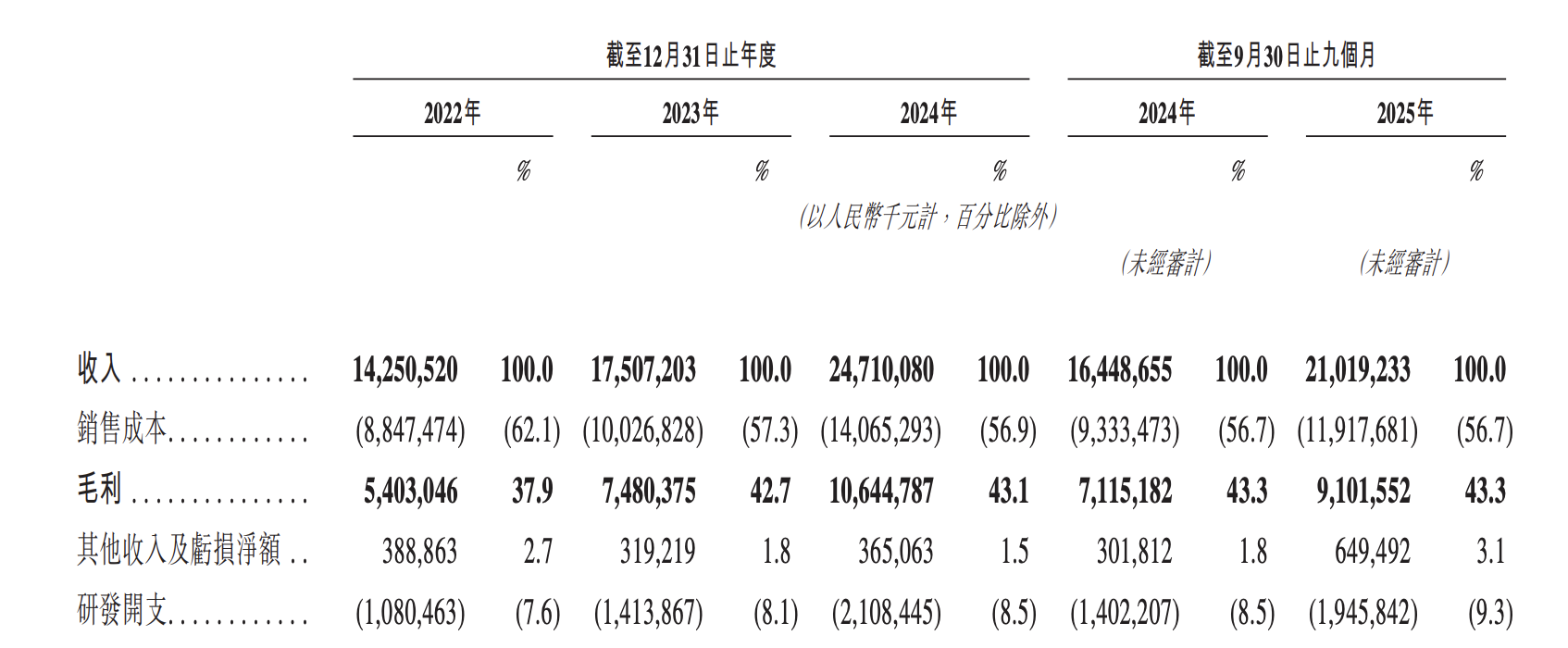
根据招股书,安克创新的年营收从2022年的143亿元增长至2024年的247亿元,年复合增长率达31.7%;同期毛利从54亿元增至106亿元,年复合增长率为40.4%。在规模快速扩张的同时,安克创新的盈利能力同步增强,整体毛利率由2022年的37.9%提升至2024年的43.1%。此外,公司的销售成本占比从2022年的62%下降到2024年的57%,而研发开支三年来则从7.6%增长至8.5%。

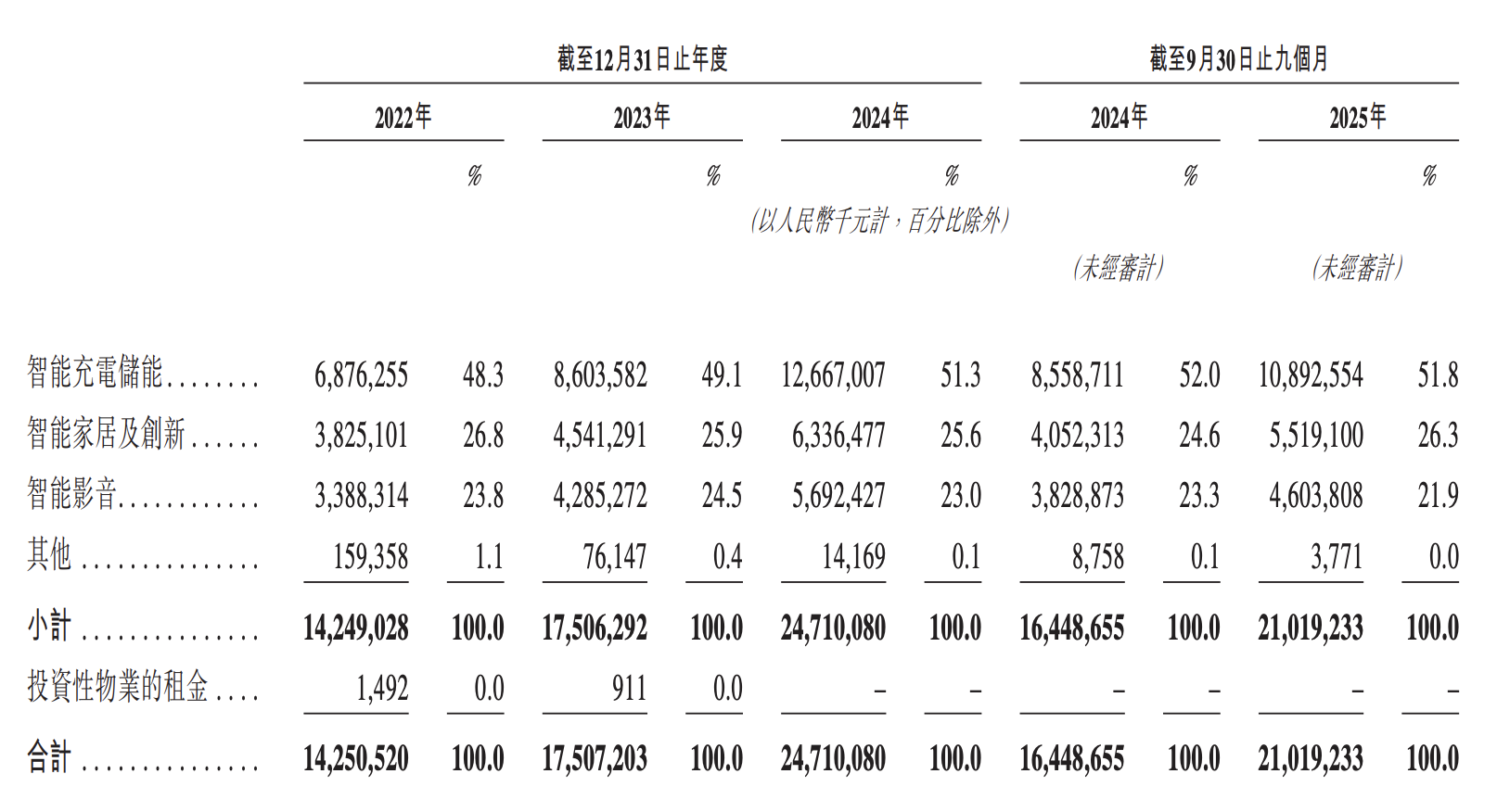
在产品线方面,安克创新的产品覆盖智能充电储能、智能家居及创新和智能影音三大类,旗下拥有Anker品牌数码充电设备、eufy品牌智能家居产品、Soundcore品牌音频设备、Nebula品牌投影设备及AnkerMake品牌3D打印产品等多个子品牌。2024年,智能充电储能产品贡献了51%的营收,智能家居及创新类产品贡献了26%的营收,而智能影音类则贡献了23%。2022年到2024年,其三大产品线的年复合增长率分别为35.7%、28.7%和29.6%。

单看各个产品线,在全球市场也都有不错的表现。移动充电产品方面,根据弗若斯特沙利文的数据,按零售销售额计,自2020年起,Anker稳居全球第二,也是全球及北美市场最大的独立移动充电品牌。同样按照零售销售额计算,2024年安克创新占据全球移动充电产品市场份额的5.0%。

在储能领域,按2024年收入计算,安克创新已经成为全球第一大阳台光伏储能品牌。在智能家居安防产品领域,按2024年零售销售额计算,公司位列全球前五。在智能影音领域,同样按2024年零售销售额计算,Soundcore在全球无线耳机市场排名第六。

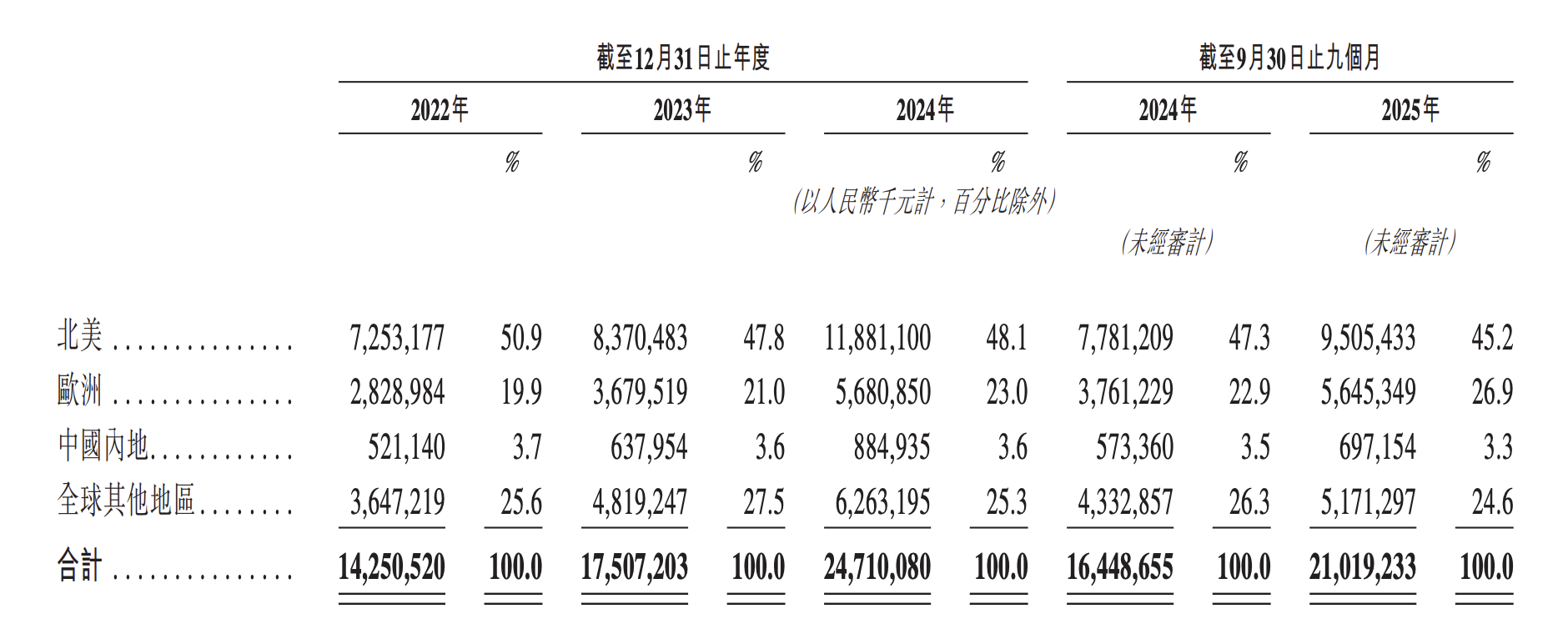
从各地区收入贡献来看,2024年安克创新的海外收入占比为96.4%,其中,北美地区贡献了最多的营收,占比达48%;其次是欧洲,占比23%;其它海外地区占比25.3%。从2022年到2025年,北美地区的业绩贡献略有下降,从2022年的50.9%变为2025年前三季度的45.2%,而欧洲地区的业绩贡献占比则呈增长趋势,从2022年不到20%增长至2025年前三季度的26.9%。

从销售渠道来看,2024年安克创新线上收入占比达71.2%,同比增长43.0%,长期在亚马逊多个区域销量领先。此外,公司独立站收入则从2022年的7亿元增长至2024年的人25亿元,增幅超三倍,并在2025年前三季度达到了21亿元。

安克创新同时也在积极开拓线下渠道,2024年线下收入同比增长达36.7%,还与全球零售巨头合作拓展自营线下零售门店。比如今年9月,安克创新联手浸式体验平台Smartechwrld,在纽约时代广场开设其在北美地区的首家线下门店。招股书表示,公司的旗舰产品和核心产品优先布局于全球零售合作伙伴的店中店与品牌专区,以及自营线下零售门店,入门款产品则通过零售大卖场和便利店进行推广。

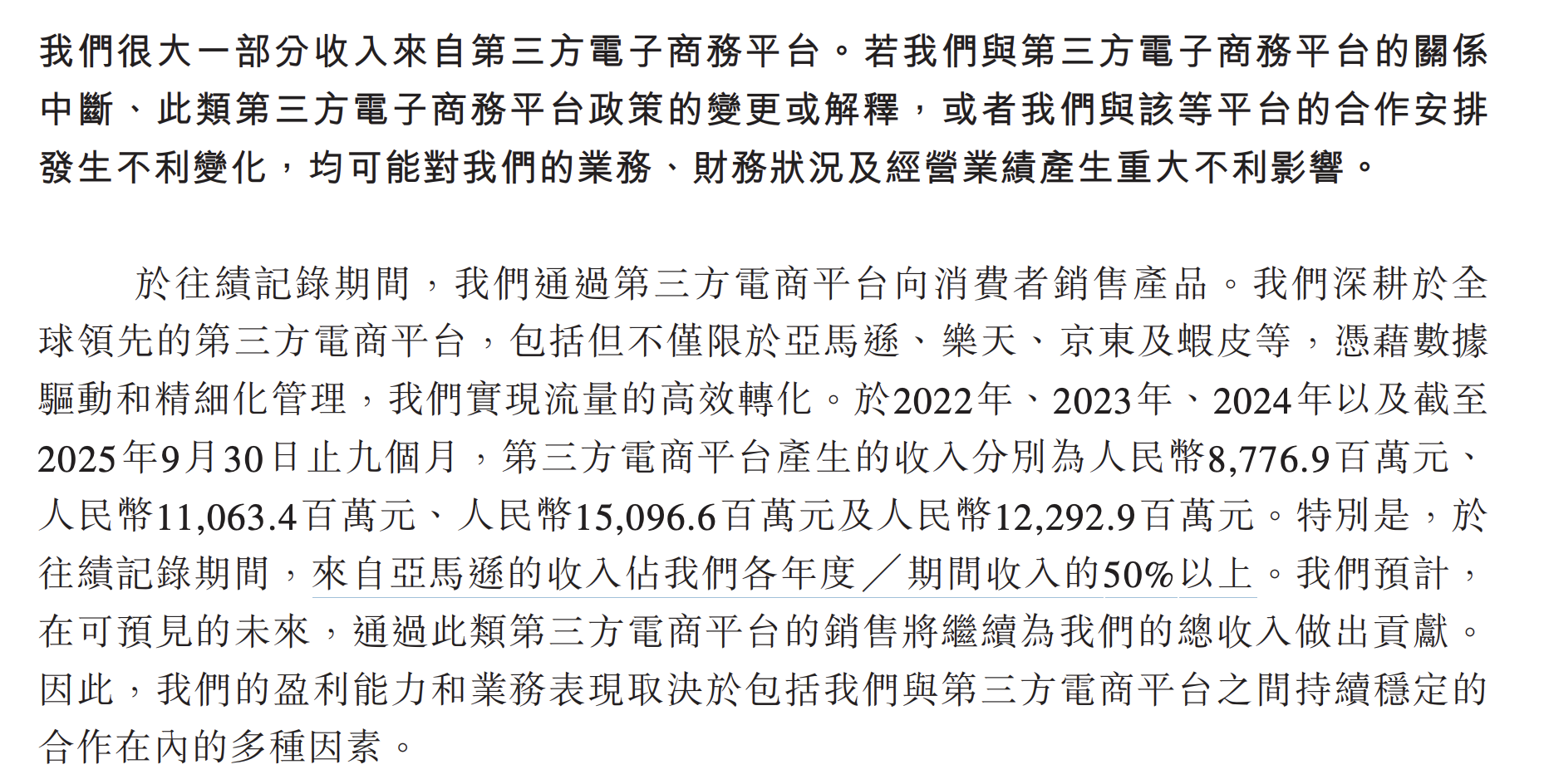
值得注意的是,在招股书中,安克创新把依赖电商平台作为了风险因素之一。招股书表示,从2022年、2023年、2024年以及2025年前三季度,第三方电商平台产生的收入分别为人87.8亿、110.6亿元和151亿和122.9亿。其中,2022年到2024年电商平台的收入占比均超过了60%,今年前三季度的占比略有下降,为58.48%。招股书还指出,在记录期内,来自亚马逊的收入在各期间都占据了50% 以上。

此外,安克创新在招股书中再次重申了其“浅海战略”,即深耕于市场规模在800亿美元以下的细分品类。招股书表示,这些领域的用户需求多元化,竞争格局尚未固化,存在巨大的创新空间和高增长潜力。

据悉,智能硬件行业可以分为包括智能手机、个人电脑及配件、智能电视的大型市场和包括移动电源、智能安防、智能音箱、充电器等产品的中小型市场。根据弗若斯特沙利文的数据,2024年中小型市场的总规模约为3400亿美元,预计至2029年将达到5836亿美元,2024年至2029年的年复合增长率达11.5%,快于整个智能硬件市场5.9%的复合增长率。


亿邦持续追踪报道该情报,如想了解更多与本文相关信息,请扫码关注作者微信。

文章来源:亿邦动力

广告
微信
朋友圈

这么好看,分享一下?

朋友圈 分享

APP内打开

+1
+1
微信好友 朋友圈 新浪微博 QQ空间
关闭
收藏成功
发送
/140 0