广告
加载中

美国对华加征20%关税 特朗普新政令于今日正式生效

王昱 2025-03-04 11:02
王昱 2025/03/04 11:02

邦小白快读

EN
全文速览

美国对中国进口商品加征关税至20%,带来显著影响和关键信息。

1. 政策生效时间:2025年3月4日美东时间00:01(北京时间13:01)正式生效,这是本年度第二次提高关税。

2. 税率变化细节:关税从10%提高到20%,叠加此前“301调查”的25%关税,中国输美商品最高综合税率达45%。

3. 潜在影响:增加美国消费者和零售商成本,提升经济复苏风险;中国外交部表示反对,将采取措施维护利益。

4. 相关案例:美国同时对墨西哥、加拿大加征25%关税,涉及非能源类商品,两国已宣布反制措施,如加拿大拟对1550亿加元美国商品加税25%。

关税提高影响品牌营销和市场竞争,需关注消费趋势和用户行为变化。

1. 品牌定价和价格竞争:成本增加可能导致中国商品在美市场涨价,影响品牌竞争力;美国消费者负担加重,可能减少购买。

2. 消费趋势和用户行为观察:美国消费者和零售商将承担更高成本,潜在需求下降;中国外交部强调贸易战无赢家,提示品牌需调整策略。

3. 产品研发启示:考虑优化供应链以应对成本压力,如转向其他市场或开发新品类。

4. 机会提示:学习墨西哥、加拿大的反制案例,探索合作方式以缓解风险。

政策风险高,需解读事件并制定应对措施,关注增长机会。

1. 政策解读和风险提示:关税提高至20%,叠加税率45%,增加出口成本;美国对墨、加加税25%,显示贸易摩擦升级。

2. 事件应对措施:中国将采取必要措施维护利益;卖家可学习反制点,如墨西哥的非关税壁垒或加拿大的加税策略。

3. 负面影响和机会提示:销售可能受阻,但探索其他市场或合作模式;商务部研究员周密指出经济复苏风险,提示卖家优化库存。

4. 可学习点:关注全球趋势,如美国消费者成本增加,调整商业模式以规避风险。

生产需求受冲击,需寻找商业机会和数字化启示。

1. 产品生产和设计需求:关税提高增加成本,工厂需调整生产计划,如减少对美出口依赖。

2. 商业机会:考虑转向非美国市场,如墨西哥、加拿大反制案例显示新贸易路径;叠加税率45%提示优化供应链。

3. 推进数字化和电商启示:利用电商平台减少中间成本;美国消费者负担加重,启示工厂开发高性价比产品。

4. 风险提示:经济复苏风险增加,工厂需关注政策变化以应对不确定性。

行业趋势变化凸显客户痛点,需提供解决方案。

1. 行业发展趋势:关税政策升级,贸易紧张加剧;美国对多国加税,显示全球贸易风险。

2. 客户痛点:进口商成本增加,如税率达45%,导致供应链中断;美国消费者和零售商负担加重。

3. 解决方案:帮助客户优化物流或合规策略;基于中国外交部回应,建议客户采取反制措施。

4. 新技术启示:无直接新技术,但可推进数字化工具以管理风险,如监控政策变化。

贸易政策影响平台运营,需管理风险和调整策略。

1. 商业对平台的需求和问题:商家可能寻求平台支持应对关税成本;税率提高至20%增加平台招商难度。

2. 平台的最新做法和运营管理:提示风向规避,如调整招商政策以吸引非美市场商家;美国对墨、加案例显示需加强风险管理。

3. 机会提示:学习反制措施,如墨西哥的关税壁垒,平台可提供合作方式扶持商家。

4. 风险提示:经济复苏风险增加,平台需优化运营以减轻影响。

产业新动向和政策启示,需分析商业模式和法规建议。

1. 产业新动向和新问题:关税提高至20%,贸易摩擦升级;叠加税率45%增加全球经济风险,美国消费者成本上升。

2. 政策法规建议和启示:中国外交部强调贸易战无赢家,违反世贸规则;研究者可建议国际合作框架。

3. 商业模式:分析反制案例,如墨西哥的非关税壁垒和加拿大的加税策略;商务部研究员周密观点提示经济复苏挑战。

4. 代表观点:周密指出不利后果由美国承担;林剑表示中方将维护利益,启示研究公平贸易机制。

返回默认

声明:快读内容全程由AI生成,请注意甄别信息。如您发现问题,请发送邮件至 run@ebrun.com 。

我是 品牌商 卖家 工厂 服务商 平台商 研究者 帮我再读一遍。

Quick Summary

The US has raised tariffs on Chinese imports to 20%, with significant implications and key details.

1. Effective date: The policy takes effect on March 4, 2025, at 00:01 EST (13:01 Beijing time), marking the second tariff increase this year.

2. Tariff changes: The rate rises from 10% to 20%, and when combined with the existing 25% tariff from the "Section 301 investigation," the maximum comprehensive tariff on Chinese goods exported to the US reaches 45%.

3. Potential impact: This will increase costs for US consumers and retailers, raising risks to economic recovery; China’s Foreign Ministry has expressed opposition and vowed to take measures to protect its interests.

4. Related cases: The US has also imposed 25% tariffs on non-energy goods from Mexico and Canada, both of which have announced retaliatory measures, such as Canada’s plan to impose a 25% tariff on C$155 billion worth of US goods.

Tariff hikes impact brand marketing and market competition, requiring attention to shifts in consumer trends and user behavior.

1. Brand pricing and competition: Rising costs may lead to price increases for Chinese goods in the US market, affecting brand competitiveness; US consumers may reduce purchases due to higher expenses.

2. Consumer trends and behavior: US consumers and retailers will bear higher costs, potentially reducing demand; China’s Foreign Ministry emphasizes that trade wars have no winners, signaling the need for brands to adjust strategies.

3. R&D implications: Optimize supply chains to mitigate cost pressures, such as exploring alternative markets or developing new product categories.

4. Opportunities: Learn from retaliatory cases in Mexico and Canada to identify collaborative approaches for risk mitigation.

High policy risks require event analysis and response strategies, with a focus on growth opportunities.

1. Policy interpretation and risks: Tariff increase to 20%, combined with a 45% total rate, raises export costs; US tariffs on Mexico and Canada indicate escalating trade friction.

2. Response measures: China will take necessary actions to protect its interests; sellers can learn from countermeasures, such as Mexico’s non-tariff barriers or Canada’s tariff strategies.

3. Challenges and opportunities: Sales may face obstacles, but exploring other markets or partnerships offers alternatives; researcher Zhou Mi highlights economic recovery risks, suggesting inventory optimization.

4. Key takeaways: Monitor global trends, like rising US consumer costs, and adapt business models to mitigate risks.

Production demand faces disruption, requiring exploration of business opportunities and digital solutions.

1. Production and design needs: Tariff hikes increase costs, necessitating adjustments like reducing reliance on US exports.

2. Business opportunities: Shift focus to non-US markets, as seen in retaliatory cases from Mexico and Canada; the 45% combined tariff underscores the need for supply chain optimization.

3. Digital and e-commerce insights: Leverage e-commerce platforms to reduce intermediary costs; rising US consumer burdens highlight opportunities for cost-effective products.

4. Risk alerts: Increased economic recovery risks require factories to monitor policy changes for uncertainty management.

Industry shifts highlight client pain points, demanding tailored solutions.

1. Industry trends: Escalating tariffs intensify trade tensions; US tariffs on multiple countries reflect global trade risks.

2. Client pain points: Importers face higher costs (e.g., 45% tariffs), risking supply chain disruptions; US consumers and retailers bear increased burdens.

3. Solutions: Assist clients with logistics or compliance optimization; based on China’s Foreign Ministry response, advise on countermeasures.

4. Technology insights: While no direct new technologies, digital tools can help manage risks, such as monitoring policy changes.

Trade policies impact platform operations, requiring risk management and strategy adjustments.

1. Merchant demands and challenges: Sellers may seek platform support to offset tariff costs; the 20% rate complicates merchant recruitment.

2. Platform management: Adjust recruitment policies to attract non-US merchants; US cases with Mexico and Canada underscore the need for enhanced risk management.

3. Opportunities: Learn from countermeasures like Mexico’s tariff barriers; platforms can offer partnerships to support sellers.

4. Risk alerts: Rising economic recovery risks necessitate operational optimizations to minimize impact.

Industry dynamics and policy implications call for analysis of business models and regulatory recommendations.

1. Emerging trends: Tariff hikes to 20% signal escalating trade friction; the 45% combined rate heightens global economic risks and US consumer costs.

2. Policy insights: China’s Foreign Ministry stresses that trade wars have no winners and violate WTO rules; researchers can propose international cooperation frameworks.

3. Business models: Analyze retaliatory cases, such as Mexico’s non-tariff barriers and Canada’s tariff strategies; researcher Zhou Mi’s views highlight economic recovery challenges.

4. Key perspectives: Zhou notes adverse consequences for the US; spokesperson Lin Jian affirms China’s intent to protect interests, underscoring the need for fair trade mechanisms.

Disclaimer: The "Quick Summary" content is entirely generated by AI. Please exercise discretion when interpreting the information. For issues or corrections, please email run@ebrun.com .

I am a Brand Seller Factory Service Provider Marketplace Seller Researcher Read it again.

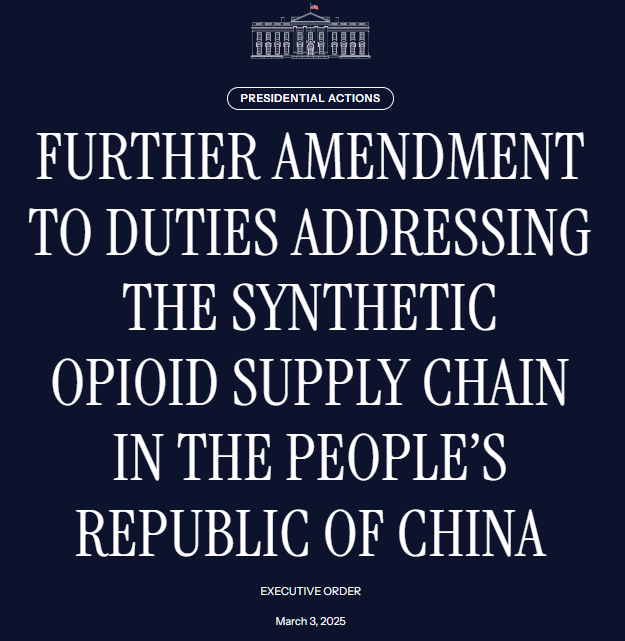
【亿邦原创】3月4日消息,美国时间2025年3月3日,特朗普正式签署行政命令,修订其2月1日发布的第14195号行政命令第2(a)条,删除“10%”一词,并插入“20%”一词代替。这意味着美国对中国进口商品的加征关税从10%再度提高到20%。

该行政命令已于美东时间3月4日00:01正式生效,对应北京时间3月4日下午13:01正式生效。

据悉,这是继2月1日美国对华加征10%关税后,本年度第二次提高关税税率,叠加此前“301调查”所实施的25%关税,中国输美商品最高综合税率将高达45%。

商务部国际贸易经济合作研究院研究员周密表示,特朗普此举会增加外国商品进入美国的成本,其不利后果最终要由美国消费者和零售商承担;而且,美国加征关税会增加经济复苏的风险,将对各国包括美国造成非常不利的后果和影响。

而中国外交部发言人林剑则于2月28日表示:美方再次以芬太尼问题为借口,威胁对中国输美产品加征关税,中方对此强烈不满,坚决反对,将采取一切必要措施坚定维护自身正当利益;中方反复声明,贸易战、关税战没有赢家。美方单方面加征关税严重违反世贸组织规则,损害两国和全球利益。

同日,美国对墨西哥、加拿大进口商品加征25%关税的政策也“按计划”正式生效,涉及墨加输美非能源类商品。此前两国业已宣布反制措施,墨西哥拟采取关税与非关税壁垒,加拿大则拟对1550亿加元美国商品加税25%。

行政令原文如下:

By the authority vested in me as President by the Constitution and the laws of the United States of America,including the International Emergency Economic Powers Act(50 U.S.C.1701 et seq.) (IEEPA),the National Emergencies Act(50 U.S.C.1601 et seq.),section 604 of the Trade Act of 1974,as amended(19 U.S.C.2483),and section 301 of title 3,United States Code,I hereby determine and order:

Section 1.Background.With Executive Order 14195 of February 1,2025(Imposing Duties to Address the Synthetic Opioid Supply Chain in the People’s Republic of China),I determined that the failure of the Government of the People’s Republic of China(PRC)to act to blunt the sustained influx of synthetic opioids,including fentanyl,flowing from the PRC to the United States constituted an unusual and extraordinary threat,which has its source in substantial part outside the United States,to the national security,foreign policy,and economy of the United States.To address that threat,I invoked my authority under section 1702(a)(1)(B)of IEEPA to impose ad valorem tariffs on articles that are products of the PRC,as defined by the Federal Register notice described in section 2(d)of Executive Order 14195,as amended by Executive Order 14200 of February 5,2025(Amendment to Duties Addressing the Synthetic Opioid Supply Chain in the People’s Republic of China).

Pursuant to section 3 of Executive Order 14195,I have determined that the PRC has not taken adequate steps to alleviate the illicit drug crisis through cooperative enforcement actions,and that the crisis described in Executive Order 14195 has not abated.

Sec.2.Amendment.In recognition of the fact that the PRC has not taken adequate steps to alleviate the illicit drug crisis,section 2(a)of Executive Order 14195 is hereby amended by striking the words“10 percent”and inserting in lieu thereof the words“20 percent”.

Sec.3.General Provisions. (a)Nothing in this order shall be construed to impair or otherwise affect:

(i)the authority granted by law to an executive department,agency,or the head thereof;or

(ii)the functions of the Director of the Office of Management and Budget relating to budgetary,administrative,or legislative proposals.

(b)This order shall be implemented consistent with applicable law and subject to the availability of appropriations.

(c)This order is not intended to,and does not,create any right or benefit,substantive or procedural,enforceable at law or in equity by any party against the United States,its departments,agencies,or entities,its officers,employees,or agents,or any other person.

THE WHITE HOUSE,

March 3,2025.


亿邦持续追踪报道该情报,如想了解更多与本文相关信息,请扫码关注作者微信。

文章来源:亿邦动力

广告
微信
朋友圈

这么好看,分享一下?

朋友圈 分享

APP内打开

+1
+1
微信好友 朋友圈 新浪微博 QQ空间
关闭
收藏成功
发送
/140 0