





广告
加载中

杭州全球跨境支付机构发布“开放银行”全球实践方案,共享全球本地化支付网络

中国跨境电商综合实验区 2024-10-18 17:48
中国跨境电商综合实验区 2024/10/18 17:48

邦小白快读

EN
全文速览

本文核心内容是杭州跨境支付机构PingPong发布面向国内银行的“开放银行”全球实践方案,核心是开放自身资源助力跨境金融发展,主要干货信息如下

1. 方案核心目标是开放PingPong在全球收、付、兑的能力和一体化生态圈,帮银行打造高质量跨境金融服务,最终助力中国品牌出海扩张

2. 目前合作进展:PingPong已经和中国银行、交通银行、网商银行等近20家国内银行达成合作落地,交通银行已经联合推出“丝路电商”跨境金融平台,广发银行升级了跨境电商服务产品

3. 当前行业背景:近年中国跨境电商高速增长,2023年进出口额达2.38万亿元,同比增长15.6%,增速远超全国整体外贸增速,多个中国品牌和跨境平台都在加速全球扩张,催生了相关服务需求

本文释放了中国品牌出海的行业趋势和金融支持利好,核心干货内容如下

1. 消费与行业趋势:当前跨境电商已成为中国外贸增长核心动力,占货物贸易进出口比重已经从2015年的1%升至5.7%,多个头部跨境平台上调全球增长目标,中国品牌出海整体规模呈几何式扩张,出海是明确的增长趋势

2. 出海痛点解决方案:本次推出的“开放银行”方案,可针对性解决品牌出海面临的多区域多币种交易、不同场景收付款、汇兑风险、全球员工薪资分发、供应链资金管理等痛点

3. 服务优势:方案依托PingPong自建的覆盖全球百余个国家和地区、链接全球上百家主流金融机构的本地化支付网络,可联合银行为品牌提供一体化全球资金管理服务,支撑品牌的全球化扩张

本文为跨境出海卖家梳理了行业增长机会和新的服务支持,干货内容如下

1. 行业增长机会:当前跨境电商是中国外贸增长的核心动力,增速远超全国外贸平均水平,2024年多个头部跨境平台都大幅上调了全球交易额增长目标,市场空间大,整体增长动力充足

2. 资金服务新选择:PingPong联合国内近20家银行推出开放银行方案,可解决卖家跨境收款、资金统一归集、换汇、供应商付款等核心需求,还能应对非主流币种的汇兑风险,比传统服务覆盖更多场景和区域

3. 可对接的资源支持:PingPong的生态圈已经接入国内外200余家新经济平台,卖家通过合作银行就能对接更丰富的渠道资源,降低出海对接成本,更容易拓展全球市场

本文为布局外贸的工厂梳理了行业趋势和出海机会,干货内容如下

1. 行业发展趋势:当前外贸已经呈现明确的线上化数字化发展趋势,跨境电商高速增长,中国品牌出海热潮兴起,工厂不管是做代工订单还是做自有品牌出海,都迎来了更大的市场空间

2. 出海商业机会:本次PingPong联合近20家国内银行推出的开放银行方案,解决了工厂出海环节的全球资金管理痛点,覆盖一般贸易、跨境电商、自有品牌出海等多种场景,能帮助工厂降低出海的资金层面门槛,更顺畅的对接全球市场

3. 数字化转型启示:当前外贸产业结构正在被数字化加速重构,工厂推进出海业务时,可以依托支付机构+银行的开放合作生态,解决跨境金融服务需求,更快完成出海业务的数字化布局,降低运营风险

本文为跨境相关服务商呈现了行业趋势和需求痛点,干货内容如下

1. 行业发展趋势:当前外贸线上化数字化转型加速,跨境电商高速增长,中国品牌出海需求旺盛,银行业普遍有布局跨境数字化开放生态圈、完善境内外一体化跨境金融服务的需求,市场空间广阔

2. 核心客户痛点:一方面,出海企业普遍存在全球多区域多币种交易、汇兑风险、多场景收付款、全球供应链资金管理、员工薪资分发等诸多痛点;另一方面,银行自身缺少覆盖全球的本地化支付网络和全场景服务能力,没办法单独满足出海客户的需求

3. 可参考的解决方案:PingPong的开放银行模式给出了清晰的解决路径,支付机构开放自身积累的全球支付网络、生态圈资源,仅通过一个API接口就能为银行输出全链路的跨境资金解决方案,双方开放合作共同服务出海客户,这种模式对同类型服务商有较高参考价值

本文为跨境相关平台商梳理了行业需求和合作方向,干货内容如下

1. 当前市场需求方向:在外贸数字化重构的大背景下,跨境平台需要更完善的跨境金融服务配套,才能满足平台内卖家和品牌的出海资金管理需求,提升平台自身的竞争力和吸引力

2. 新的合作发展方向:PingPong已经接入了全球超150家境外新经济平台、超50家境内新经济平台,还和近20家国内银行达成开放银行合作,可以为各类跨境平台提供成熟的跨境收付款、全球资金管理配套服务,平台可以通过对接这类资源优化自身服务能力

3. 风向提示:当前跨境电商高速增长,品牌出海热潮持续,平台加码全球化布局已经成为主流趋势,完善金融服务配套是吸引商家入驻的核心竞争力之一,和支付机构、银行开放合作是符合行业发展的方向,能够帮助平台更快扩大规模

本文呈现了跨境金融领域的产业新动向和创新商业模式,干货内容如下

1. 产业新动向:当前中国外贸正处于数字化转型加速期,跨境电商已经成为外贸增长的核心动力,中国品牌出海进入高速增长阶段,催生了跨境金融服务的大量新需求,开放共享已经成为跨境金融领域发展的新趋势

2. 创新商业模式:PingPong推出的“开放银行”全球实践方案,打造了支付机构与银行开放合作的创新商业模式:支付机构输出自身的全球支付网络、场景服务能力和生态圈资源,银行输出金融资质和客户端资源,双方优势互补共同服务出海客户,解决了单一机构服务能力覆盖不足的问题

3. 值得研究的新问题:这种跨机构开放合作的新模式,如何适配不同规模不同类型出海主体的差异化需求,如何管控合作中的各类风险,如何进一步提升服务效率,都是产业发展中出现的新问题,具备较高的研究价值

返回默认
声明:快读内容全程由AI生成,请注意甄别信息。如您发现问题,请发送邮件至 run@ebrun.com 。

我是 品牌商 卖家 工厂 服务商 平台商 研究者 帮我再读一遍。

Quick Summary

This article reports that Hangzhou-based cross-border payment provider PingPong has launched a global open banking practice solution for domestic Chinese banks, centered on opening its own resources to advance cross-border finance development. Key takeaways are as follows:

1. The core goal of the solution is to open up PingPong's end-to-end global collection, payment and currency exchange capabilities, as well as its integrated ecosystem, to help banks build high-quality cross-border financial services and ultimately support the global expansion of Chinese brands.

2. On cooperation progress: PingPong has already reached落地合作 with nearly 20 domestic Chinese banks including Bank of China, Bank of Communications and MYbank. Bank of Communications has co-launched the "Silk Road E-commerce" cross-border financial platform, while China Guangfa Bank has upgraded its cross-border e-commerce service products.

3. Industry context: China's cross-border e-commerce has grown rapidly in recent years, with total import and export volume reaching 2.38 trillion yuan in 2023, up 15.6% year-on-year — far outpacing the growth rate of China's overall foreign trade. Accelerated global expansion by multiple Chinese brands and cross-border platforms has created strong demand for related supporting services.

This article outlines key industry trends and new financial support for Chinese brands expanding globally. Key takeaways are as follows:

1. Consumer and industry trends: Cross-border e-commerce has become the core growth driver of China's foreign trade, with its share of total goods trade rising from 1% in 2015 to 5.7% today. Multiple leading cross-border platforms have raised their global growth targets, and the overall scale of Chinese brands going global has expanded exponentially, making outbound expansion a clear growth trend.

2. Solutions for outbound expansion pain points: PingPong's new open banking solution directly addresses common pain points for brands expanding overseas, including multi-region, multi-currency transactions, payments and collections across different use cases, foreign exchange risk, global payroll distribution, and supply chain cash management.

3. Service advantages: Built on PingPong's self-developed localized payment network covering more than 100 countries and regions and connected to hundreds of leading global financial institutions, the solution enables banks to provide brands with integrated global cash management services to support their global expansion.

This article summarizes industry growth opportunities and new supporting services for cross-border sellers. Key takeaways are as follows:

1. Industry growth opportunities: Cross-border e-commerce is currently the core growth driver of China's foreign trade, with a growth rate far exceeding the national average for overall foreign trade. In 2024, multiple leading cross-border platforms have significantly raised their global transaction growth targets, creating large market space and sufficient overall growth momentum.

2. New option for capital services: PingPong's open banking solution, launched in partnership with nearly 20 domestic Chinese banks, meets sellers' core needs including cross-border collection, unified capital aggregation, currency exchange and supplier payments, while also hedging foreign exchange risk for non-mainstream currencies. It covers more use cases and regions than traditional services.

3. Accessible resource support: PingPong's ecosystem already connects to more than 200 domestic and international new economy platforms. Through partner banks, sellers can access richer channel resources, reduce onboarding costs for outbound expansion, and more easily expand into global markets.

This article sorts out industry trends and outbound opportunities for factories with foreign trade布局. Key takeaways are as follows:

1. Industry development trends: Foreign trade is clearly shifting toward online and digital operations, with cross-border e-commerce growing rapidly and a booming trend of Chinese brands going global. Both factories handling OEM orders and those building their own brands for overseas markets now have access to much larger market space.

2. Outbound business opportunities: The open banking solution co-launched by PingPong and nearly 20 domestic Chinese banks solves global cash management pain points for factories expanding overseas. It covers multiple scenarios including general trade, cross-border e-commerce, and own-brand outbound expansion, helping factories lower capital-related barriers to entry and connect more smoothly to global markets.

3. Insights for digital transformation: Digitalization is accelerating the restructuring of the foreign trade industrial structure. When expanding outbound, factories can leverage the open cooperation ecosystem between payment providers and banks to meet their cross-border financial service needs, complete the digital布局 of outbound business faster, and reduce operational risks.

This article outlines industry trends and core demand pain points for cross-border service providers. Key takeaways are as follows:

1. Industry development trends: The digital and online transformation of foreign trade is accelerating, cross-border e-commerce is growing rapidly, and demand from Chinese brands to expand globally is strong. Banks are generally seeking to build cross-border digital open ecosystems and improve integrated domestic and international cross-border financial services, creating broad market space.

2. Core customer pain points: On one hand, outbound-facing enterprises generally face a range of pain points including multi-region multi-currency transactions, foreign exchange risk, payments across scenarios, global supply chain cash management and global payroll distribution. On the other hand, banks lack a localized global payment network and full-scenario service capacity, making it impossible to meet the needs of outbound clients on their own.

3. Referenceable solution: PingPong's open banking model offers a clear solution path. Payment providers open their accumulated global payment networks and ecosystem resources, and can deliver a full-stack cross-border capital solution to banks through a single API. This open cooperation model, where both parties work together to serve outbound clients, offers valuable reference for peer service providers.

This article sorts out market demand and cooperation directions for cross-border platform operators. Key takeaways are as follows:

1. Current market demand: Against the backdrop of digital restructuring of foreign trade, cross-border platforms need more complete cross-border financial supporting services to meet the cash management needs of sellers and brands on their platforms, and improve their own competitiveness and appeal.

2. New cooperation directions: PingPong already connects to more than 150 overseas new economy platforms and more than 50 domestic new economy platforms, and has reached open banking cooperation with nearly 20 domestic Chinese banks. It can provide mature cross-border payment and collection, and global cash management supporting services for all types of cross-border platforms. Platforms can access these resources to improve their own service capabilities.

3. Trend indication: With cross-border e-commerce growing rapidly and the boom of brand outbound expansion continuing, stepped-up global布局 has become a mainstream trend for platforms. Improving financial service supporting capacity is one of the core competitiveness factors to attract merchants to onboard, and open cooperation with payment providers and banks aligns with industry development direction, helping platforms scale faster.

This article presents new industrial trends and innovative business models in the cross-border financial sector. Key takeaways are as follows:

1. New industrial trends: China's foreign trade is currently in a period of accelerated digital transformation. Cross-border e-commerce has become the core growth driver of foreign trade, and Chinese brands going global have entered a phase of rapid growth, generating a large amount of new demand for cross-border financial services. Open sharing has become a new development trend in the cross-border financial sector.

2. Innovative business model: The "open banking" global practice solution launched by PingPong creates an innovative business model of open cooperation between payment providers and banks: payment providers contribute their global payment networks, scenario service capabilities and ecosystem resources, while banks contribute financial licenses and client-side resources. The two parties complement each other's advantages to jointly serve outbound clients, solving the problem of insufficient service coverage from a single institution.

3. New research questions: How this new cross-institutional open cooperation model can adapt to the differentiated needs of different sizes and types of outbound entities, how to manage various risks in cooperation, and how to further improve service efficiency, are all new issues emerging in industrial development that carry high research value.

Disclaimer: The "Quick Summary" content is entirely generated by AI. Please exercise discretion when interpreting the information. For issues or corrections, please email run@ebrun.com .

I am a Brand Seller Factory Service Provider Marketplace Seller Researcher Read it again.

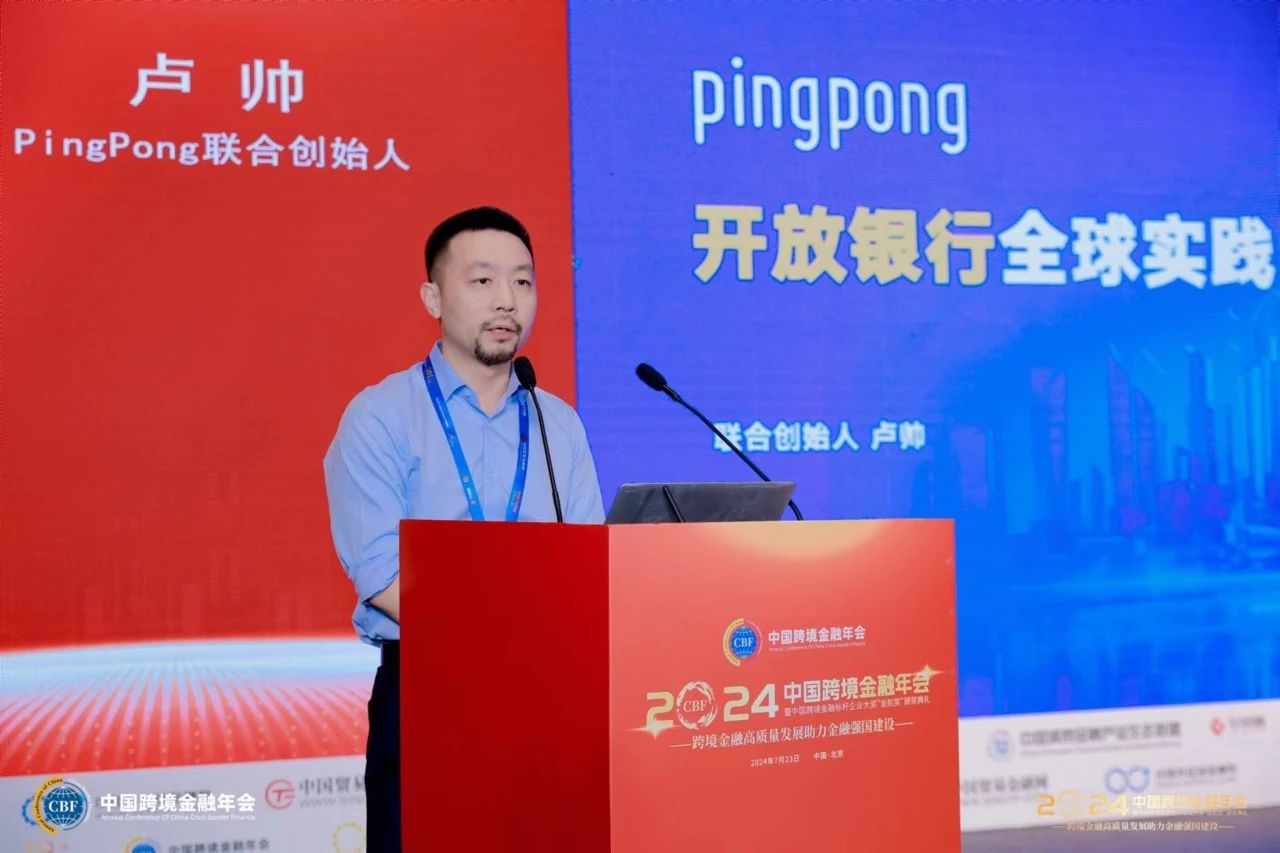
7月23日,杭州全球跨境支付机构PingPong发布了面向国内银行的“开放银行”全球实践方案,将PingPong在中国消费品牌跨国企业全球资金管理,在线新外贸平台、进出口一般贸易等重点场景中的全球收、付、兑能力和一体化生态圈开放共享,帮助银行打造高质量的跨境金融服务,共同助力中国品牌新全球化的快速扩张。

目前,公司已与中国银行、交通银行、中国农业银行、浦发银行、广发银行、网商银行等近20家国内银行达成合作并落地应用。

近年来,数家银行均与PingPong达成合作,支持跨境贸易。其中,交通银行于2023年11月联合PingPong发布了“丝路电商”跨境电商综合金融服务平台,全面助力“一带一路”高质量建设;广发银行与PingPong合作升级了面向跨境电商客户的“广商汇2.0”产品,加快布局跨境数字化开放生态圈,成为银行进一步优化外贸综合金融服务、便利跨境贸易产业发展的重要趋势。

随着当前外贸交易业态向线上化发展已成重要趋势,跨境电商成为我国对外贸易的有生力量,中国品牌出海亦势如破竹:2023年,中国跨境电商进出口2.38万亿元人民币,增长15.6%,比全国进出口增长速度高出15.4个百分点。跨境电商占我国货物贸易进出口比重已从2015年的1%,增长到5.7%;以Temu、TikTok Shop、阿里速卖通、Shein为代表的中国新经济平台,2024年陆续上调各自在全球市场的交易额增长目标,分别达到233%、150%、125%和40%;比亚迪、瑞幸、蜜雪冰城、名创优品等中国品牌出海规模呈几何式扩张。

在外贸形态和产业结构正在被数字化加速重构的当下,与银行共享高质量的全球新经济生态圈和全球本地化的支付网络,是PingPong推进“开放银行”全球实践的重要策略。

“PingPong把过去几年在全球积累的服务大型企业、中小企业的能力向银行业开放,同时也希望银行能与我们开放合作,共同处理在新全球化时代中遇到的新问题。我们最终的目的就是希望能够和银行共同服务新经济、新出海时代的新客户。”PingPong联合创始人卢帅表示。

“我们的生态圈里有像亚马逊、沃尔玛、shopify、App Store等150多家境外新经济平台,也有阿里巴巴、TiKTok Shop、京东、得物等50多家境内新经济平台,以及包括美的、华为、小米等50多家大型中资跨国企业。”卢帅介绍,围绕银行业快速布局跨境数字化生态圈,全面完善境内外、本外币、离在岸一体化服务能力这一需求,PingPong已经和国内外多家银行达成了在跨境电商、线上新外贸平台、大中型中国品牌出海企业等多个类型上的开放合作。

在PingPong “开放银行”生态里,通过1个API接口,PingPong就可以为银行输出覆盖全球100多个电商平台的跨境收款能力,并且能根据银行在不同平台和不同市场的需求,提供全链路的资金解决方案,实现资金统一归集、统一换汇和供应商付款等功能;针对中国品牌企业出海面临的全球多区域、多币种、线上和线下多种交易方式、各国员工工资分发、上下游供应链长、收付款方式多样、非主流币种汇兑风险大等全球资金管理痛点,PingPong可以将自建的深入链接全球100多家银行(包括全球前10大银行)、国际卡组和金融机构,覆盖美国、欧洲、加拿大、日本、新加坡、澳大利亚等发达国家,以及印度、墨西哥、越南、印尼、马来西亚等新兴经济体国家的全球收、付、兑网络开放给境内银行,与之协作共同为跨国企业提供境内外、本外币、离在岸一体化的全球网银系统。


注:文/中国跨境电商综合实验区,文章来源:全球跨境电商知识服务中心,本文为作者独立观点,不代表亿邦动力立场。

文章来源:全球跨境电商知识服务中心

广告
微信
朋友圈

FAQ回顾

PingPong开放银行方案是什么?

PingPong开放银行方案是面向国内银行的全球实践方案,将其全球收、付、兑能力和一体化生态圈开放共享,帮助银行打造高质量的跨境金融服务,助力中国品牌全球化扩张。

PingPong与哪些银行达成了合作?

PingPong已与中国银行、交通银行、农业银行、浦发银行、广发银行、网商银行等近20家国内银行达成合作,并落地了如交通银行‘丝路电商’平台、广发银行‘广商汇2.0’等应用。

PingPong的全球支付网络覆盖哪些区域?

PingPong的支付网络链接全球100多家银行,覆盖美国、欧洲、加拿大、日本等发达国家,以及印度、墨西哥、越南等新兴经济体,支持100多个电商平台的跨境收款。

这么好看,分享一下?

朋友圈 分享

APP内打开

赞 +1
+1
微信好友 朋友圈 新浪微博 QQ空间
关闭
收藏成功
发送
/140 0

